

Business key control after employee leaves starts with a simple rule. Find every way the person could enter, collect what can be collected, and shut off access that is no longer needed. Check physical keys, badges, codes, remote openers, and shared access before the person’s last day when possible. If control of a key is uncertain, treat the affected door as needing a lock review.

Start with a full list of access points
Don’t limit the review to the main entrance. A person may have had access through a side door, loading area, storage room, office, gate, filing cabinet, or equipment room. They may also know a keypad code shared by a team.
Make a short list before you begin changing anything. Walk the site if you can. Compare the list with the keys, badges, and permissions assigned to the departing worker.
- Exterior doors and gates
- Interior doors that protect stock, records, cash, tools, or equipment
- Desk, cabinet, mailbox, and storage keys
- Master keys and keys that open more than one room
- Keypad codes, card readers, fobs, and remote controls
- Alarm, camera, intercom, and garage or gate permissions
Write down the door or system, the credential used, and who can approve a change. That record keeps a missed door from becoming a long-term problem.
Collect physical property before access is removed
Ask for all company keys, building passes, keycards, fobs, parking tags, remotes, and issued devices. Count the items as they come back. A returned key ring does not prove every key is present, so compare it with the issue record when one exists.
Keep the handoff calm and clear. Tell the person what needs to be returned and where to bring it. If an exit is planned, this can happen during the normal offboarding meeting. If a separation is unexpected or sensitive, coordinate the timing with the people who handle your workplace safety, HR, and legal process.
The Cybersecurity and Infrastructure Security Agency guidance calls for physical and electronic access to be revoked by the end of the same business day for adverse separations. It is recommended guidance, not a rule that fits every private business. Your own separation process may call for a different sequence.
Disable electronic entry instead of relying on returned items
A card or fob can be returned, lost, or left in a desk. Remove its permission in the system instead of treating the returned item as the final step. Do the same for door codes, mobile credentials, gate remotes, alarm access, and visitor systems.
Use the person’s name or credential number to check each system. Remove access from the main entry first, then work through restricted rooms and shared spaces. If several people use one code, changing that code may be safer than assuming it stayed private.
Check access linked to a job role
A role change needs a review too. Someone who moves from receiving to sales may no longer need access to a stock room. Someone who takes on a management role may need new access. The National Institute of Standards and Technology says organizations should review physical and system access when job duties change and adjust authorization to the person’s current need.
That publication is a security framework rather than a universal requirement for every business. Its basic practice still gives managers a useful question. Does this person need access to this area for the job they have now?
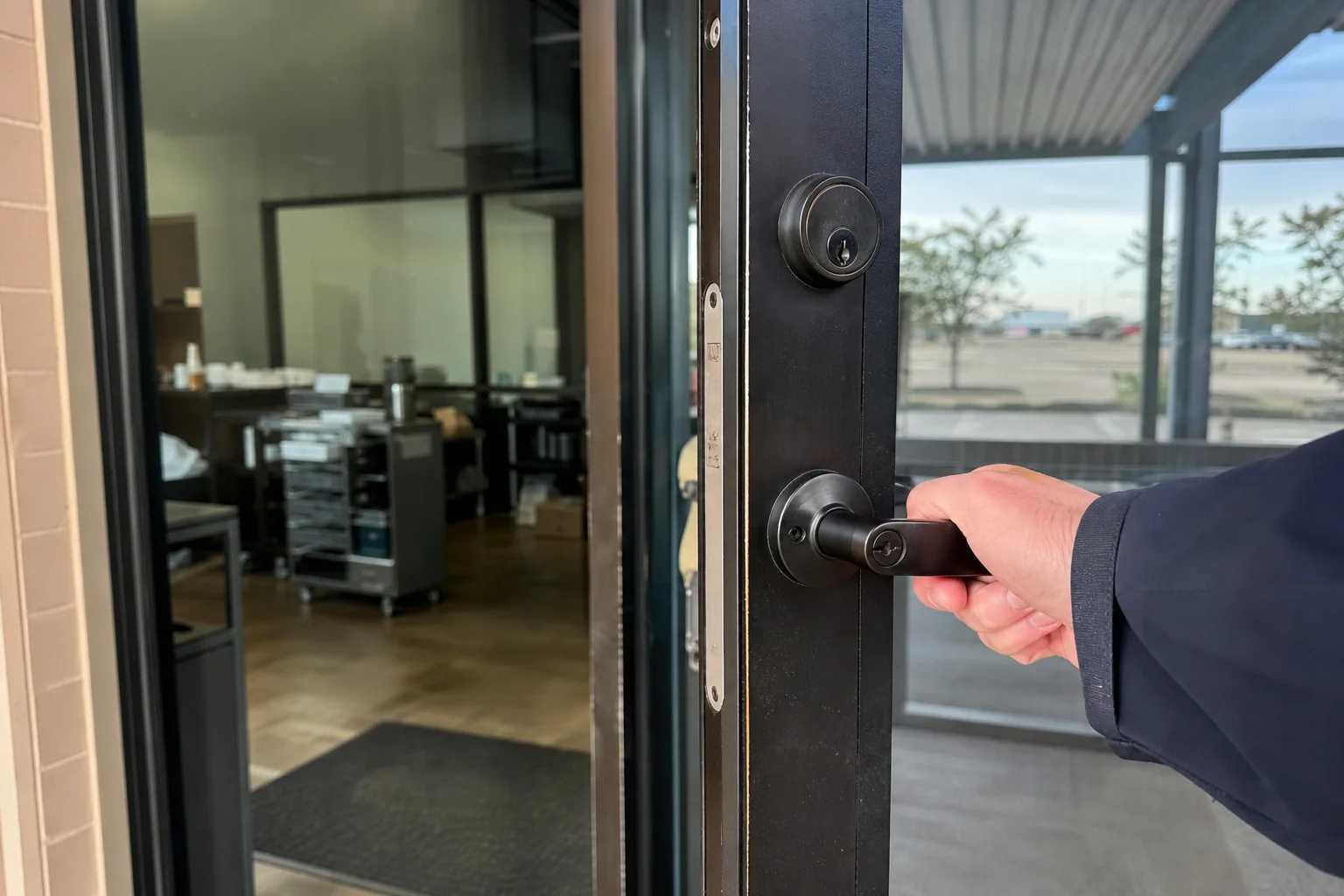
Decide whether each lock needs a change
Not every departure calls for a new lock. The key question is whether you still control every working key for that door. A key that was returned and tracked may call for no hardware change. A missing key, an untracked copy, or an unknown handoff creates a different decision.
| What you know | Next step to consider |
|---|---|
| Every issued key came back and no copy is suspected | Update the key record and keep the current lock under normal control. |
| A key is missing or you cannot confirm where it went | Ask a locksmith to review whether rekeying or replacement fits the door and hardware. |
| A person had a master key | Identify all doors in that key group before changing locks or issuing replacement keys. |
| A shared code was known by the person | Change the code and give the new code only to people who still need it. |
| A badge or fob was lost | Disable that credential in the access system and confirm the door no longer accepts it. |
Rekeying changes the inside parts of a compatible lock so an old key no longer works. It may let a business keep the existing hardware, but a locksmith needs to inspect the lock before confirming that choice. For a missing or uncertain key, commercial lock rekeying can be a practical next step for affected doors.
Trace master-key groups before making a change
A master key system can make daily work easier, yet it raises the stakes when a key is not returned. A single key may open the front door, offices, storage areas, or several locations. Don’t rekey only the door you remember seeing the person use.
Find the key schedule, key tags, or records that show which doors belong together. If no record exists, avoid guessing. A locksmith can inspect the cylinders and help map the group. Keep the updated record in a place limited to approved managers.
Use this chance to improve the key record
You don’t need a complex system to start. Assign each issued key a number. Record who has it, what it opens, when it was issued, and when it came back. Avoid putting the business name or door location on a lost key tag. A simple log can show you when a key group has become too hard to control.
Check the doors after permissions are changed
Complete the job with a short test. Try the updated code, card, or fob with an authorized person. Confirm that the door latches and locks when it closes. For a rekeyed lock, test each newly issued key and make sure old keys are removed from circulation.
Also look at the door itself. A working cylinder cannot make up for a door that does not close, a loose strike plate, or a damaged closer. Note what needs repair and keep that item separate from the employee exit record. It is easier to track one clear task at a time.
Close the record so the same gap does not return
Use a checklist signed or approved by the person responsible for the location. Include the employee name, departure or role-change date, returned items, disabled credentials, changed codes, affected doors, and the person who completed each task. Don’t record actual door codes in a general personnel file.
Set a reminder to review access after the next staffing change. Regular reviews also catch credentials given to contractors, temporary workers, cleaners, and former managers. The goal is simple. Your access list should match the people who need to enter today.
Questions managers often ask
What if an employee says a key was lost?
Record the key number or the door it opened, the date it was reported, and whether it belonged to a larger key group. Do not issue a replacement and stop there. Review the affected lock or group promptly because you cannot know who may have the lost key.
Should a manager keep a spare key from a departing employee?
Keep only controlled spares in your approved key storage. A spare that has been carried off site may be hard to account for, even if it is returned. Mark its status in the key record so you know whether it remains an active key or should be retired.
Who should approve access changes?
Choose a manager or owner who understands the person’s current duties and the rooms they need. For sensitive departures, include the people responsible for workplace safety and employment procedures. Limit the number of people allowed to issue keys or approve codes.
Can card access replace every physical key?
That depends on your doors, locks, power needs, and daily operations. Mechanical keys may still be needed for some doors or as part of an emergency plan. Ask for a site review before choosing a system or assuming it will work with existing hardware.
For help reviewing affected locks after a Houston employee departure, call United Locksmith at 832-220-4722 for commercial locksmith service. Share which keys are missing, which doors are involved, and whether a master-key group or electronic entry is part of the situation so the next step can be planned.